HEFAMAA cautions residents on excessive use, abuse of local herbs
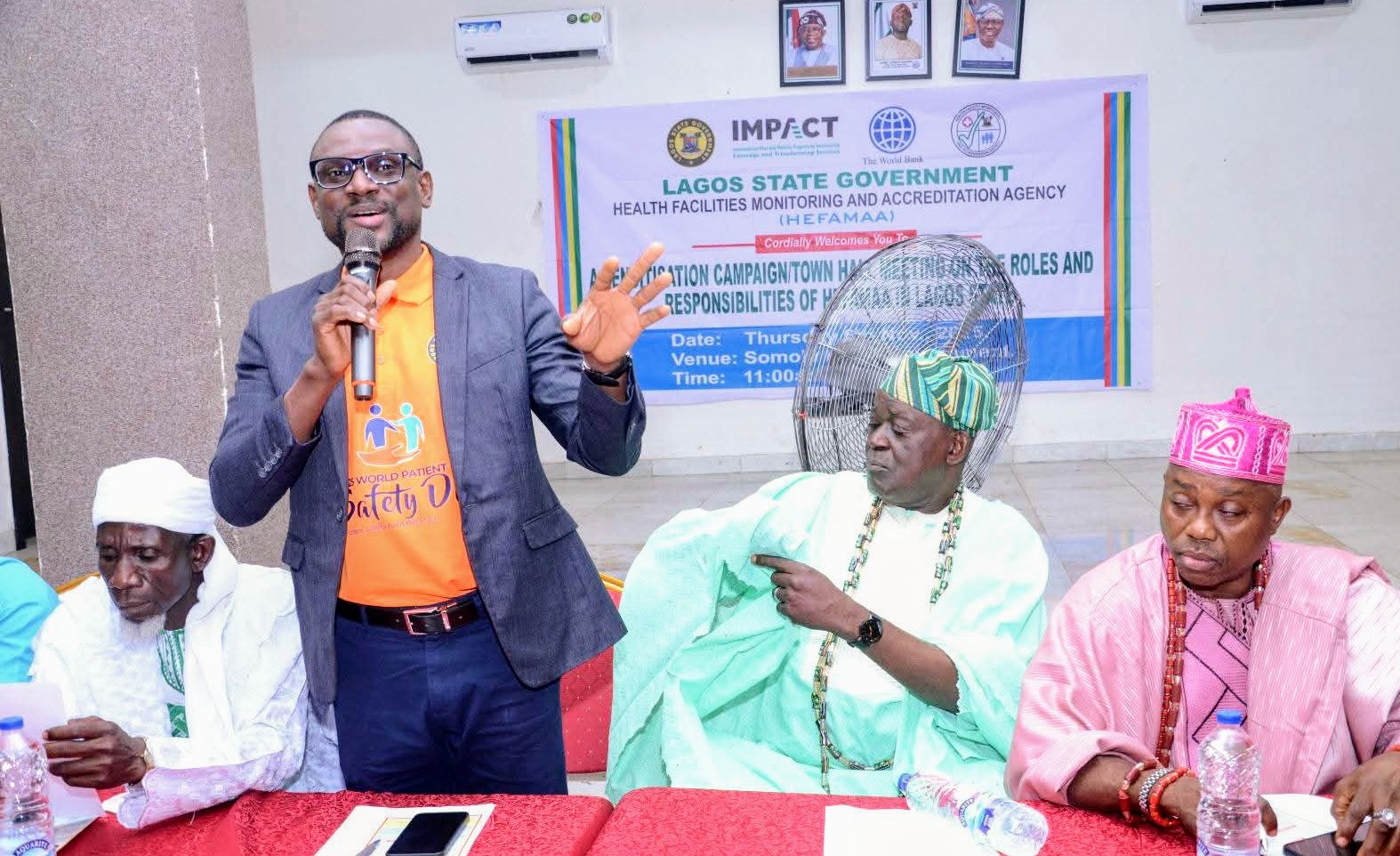
… Urges Somolu Residents to Patronise Only Govt-Approved Health Facilities
The Lagos State Health Facilities Monitoring and Accreditation Agency (HEFAMAA) has cautioned residents against the indiscriminate consumption of local herbal mixtures, popularly known as agbo, warning that excessive or unprescribed use poses serious health risks.
The warning was issued by the Permanent Secretary of HEFAMAA, Dr. Abiola Idowu, during a sensitisation campaign and town hall meeting held in Somolu Local Government Area, which is part of the agency’s ongoing efforts to promote safe healthcare delivery across the state.
Speaking at the event, Dr. Idowu, represented by Hefamaa’s Head of Research and Statistics, Dr. Olonire Olorunfemi, expressed concern over the increasing reliance on unregulated herbal concoctions, noting that many of them contain unknown or unsafe substances that could harm vital organs when taken excessively and without caution.
She stressed that any medication, whether herbal or orthodox, must be taken with professional guidance and in the right dosage to avoid long-term health complications.
The Permanent Secretary urged Lagosians to always seek medical attention from approved and accredited healthcare facilities, explaining that such facilities are periodically monitored and certified by HEFAMAA to ensure compliance with established safety and quality standards.
She further emphasised that the agency remains committed to ensuring that residents have access to reliable, safe, and affordable healthcare services.
“For residents who prefer traditional medicine, we are not discouraging cultural practices,” Dr. Idowu noted. “However, we strongly advise that they only patronise certified traditional medicine practitioners who operate within the limits of their expertise and in compliance with regulatory standards.”
She added that HEFAMAA will continue to collaborate with relevant stakeholders to promote responsible practice, protect public health, and enhance confidence in Lagos State’s healthcare system.
The sensitisation campaign in Somolu follows a similar exercise recently held in the Surulere Local Government, among other LGAs already visited, with plans to extend the same sensitisation to other local councils.
She explained that the initiative is part of the agency’s broader plans to educate residents on the dangers of unsafe healthcare practices and encourage them to verify the registration status of hospitals, clinics, and traditional medicine outlets before receiving treatment.
Dr. Idowu reaffirmed that HEFAMAA, established under the Lagos State Health Sector Reform Law of 2006, will continue to enforce standards, monitor facilities, and accredit healthcare providers to safeguard the lives and well-being of Lagos residents.
During his presentation on “The Importance of Registration and QR Codes,” the Chief Nutrition Officer of HEFAMAA, Mr. Richard Olusanya, provided insight into the agency’s establishment and regulatory mandate.
He recalled that the Lagos State Health Facilities Monitoring and Accreditation Agency, created in 2006, was instituted to standardise and supervise the operations of hospitals, clinics, maternity centres, and other healthcare providers across the state.
Olusanya noted that the agency’s core mission is to enforce strict professional and environmental standards, ensuring that only qualified and licensed practitioners are permitted to manage health institutions.
He cautioned against the growing incidence of untrained individuals running multiple medical services, describing such practices as a dangerous form of quackery that threatens patient safety.
“It is non-negotiable that anyone managing a medical facility must be a registered healthcare professional,” he stated firmly. “We cannot allow situations where one person claims to be an eye specialist, dentist, and general practitioner all at once. Such conduct puts lives at risk.”
He further explained that HEFAMAA carries out biannual facility inspections to monitor compliance with operational standards and remind operators of their scope of service. According to him, clinics are not designed for 24-hour care, unlike hospitals equipped for continuous service delivery.
Olusanya concluded by urging health facility owners to display their registration certificates prominently within their premises, stressing that visible proof of registration helps build public trust and reinforces accountability in the healthcare sector.