Onyendu Ndigbo not crown but call to service says Prince Ubochi Ubochi, Secretary, CRIDTTL
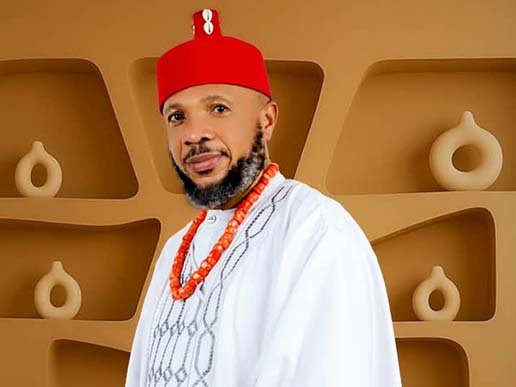
Prince Ubochi Ubochi, JP, FICCON, MCSN, is the Secretary, Committee on the Regularization of Igbo Diaspora Traditional Title & Leadership (CRIDTTL)
Ahead of the October 3 presentation and inauguration of Ndindu Ndigbo in Lagos, Prince Ubochi explains the thinking behind the new framework, the screening process for recognised leaders, the responsibilities attached to the Onyendu portfolio and the Committee’s vision for a more structured and credible system of Igbo cultural leadership in the diaspora. He speaks further.
The Igbo community in Lagos is preparing for what is being described as a major presentation and inauguration of Ndindu Ndigbo. What exactly is happening on October 3?
What is happening at the prestigious Colonades Hotels, Ikoyi on October 3 is the public presentation and inauguration of selected Ndindu Ndigbo in Lagos under the auspices of the South East Council of Traditional Rulers, SECTR, through the Committee on the Regularization of Igbo Diaspora Traditional Title and Leadership, CRIDTTL.
It is important to understand that this is not simply another social gathering or title-presentation ceremony. It represents an institutional transition in the way Igbo traditional leadership is structured outside the South East.
The South East Council of Traditional Rulers has moved to provide a more clearly defined framework for Igbo traditional representation in the diaspora, and CRIDTTL was established to undertake the difficult implementation work; screening, verification, assessment, documentation and recommendation of prospective Onyendu.
So, October 3 is really about responsibility, institutional recognition and a new standard of leadership.
Why was there a need to introduce the Onyendu Ndigbo framework in the first place?
For many years, there were different forms of Igbo traditional titles being used outside Igboland; Eze, Eze Igbo, Eze Ndigbo, Igwe and other royal designations. This generated questions around authority, jurisdiction, recognition and the relationship between diaspora Igbo leadership and the traditional institutions of host communities.
The South East Council of Traditional Rulers has now provided a different framework for Igbo leaders outside the South East.
The move has also received public support from Ohanaeze Ndigbo Worldwide. In April 2026, its President-General, Senator John Azuta-Mbata, announced that the conferment and use of the title Eze Ndigbo outside Igboland was no longer recognised.
It is important to note that some States, particularly Lagos and Edo, have taken firm measures against the unauthorized assumption or impersonation of royal traditional titles such as “Eze.” We therefore do not want any of our people, in Nigeria or anywhere in the world, to expose themselves to avoidable legal, administrative, security or reputational consequences. This process is aimed at ensuring proper recognition, legitimacy and protection of our people, while promoting responsible and lawful traditional leadership wherever they reside.
SECTR subsequently implemented the Onyendu Ndigbo framework through the induction of diaspora leaders. Reports of the May and July exercises describe Onyendu as traditional representatives or custodians of Igbo values rather than territorial monarchs.
What does Onyendu Ndigbo actually mean in practical terms?
It means leadership with responsibility.
An Onyendu is not a territorial monarch. He does not acquire sovereignty over a host community simply because he has been recognised as Onyendu Ndigbo.
His responsibility is to lead, unite, represent, mediate, preserve culture and solve problems.
We want people who can be approached when there is a problem; not people who become the problem.
An Onyendu should be a bridge between Ndigbo and the host community, between generations, between individuals and, where necessary, between the Igbo community and relevant institutions.
The title should therefore be understood as a portfolio of responsibility, not a licence for personal aggrandisement.
There has been a lot of emphasis on the screening process. How rigorous was it?
We took the screening responsibility very seriously.
People were not simply selected because they wanted a title or because somebody recommended them casually. CRIDTTL was established specifically to introduce a more credible process.
We examined documentation, background, community standing, identity, domain of operation and the person’s capacity to provide responsible leadership. The process involved consultation, verification and assessment.
The objective was to ensure that those eventually presented could understand the weight of the responsibility being entrusted to them.
The numbers also show that this was not a one-off exercise. 33 people were inducted in May and another 44 in July, making 77 from those two exercises. The process has also included people connected with Igbo communities outside Nigeria.
What would you say to those receiving their certificates on October 3?
Most of them have received their certificates but they will be presented and inaugurated publicly on 3rd. However I would say: do not mistake recognition for entitlement.
You have been entrusted with something.
Your certificate should not be something you put on your wall and forget. It should remind you every day that people are watching what you do with the responsibility.
Do not use Onyendu to bully people. Do not intimidate people. Do not use the name of Ndigbo to extort or solicit money from politicians. Do not turn the office into a business venture.
Do not ask yourself, “What can I gain from being Onyendu?”
Ask yourself, “What can I achieve for my people because I am Onyendu?”
That is the difference between a title-holder and a leader.
What standard of conduct does CRIDTTL expect from an Onyendu?
Very high standards.
We expect integrity, dignity, fairness, maturity, humility and courage.
An Onyendu should not be involved in conduct that publicly diminishes the dignity of the office. He should be someone who commands respect through character rather than through intimidation.
He should not be partisan in the discharge of his responsibilities. He should be able to relate fairly with Ndigbo irrespective of political affiliation, religious denomination, state of origin, town or clan.
If an Onyendu from Lagos has 10 Igbo people before him; one from Abia, another from Anambra, Ebonyi, Enugu, Imo, Delta, Rivers or elsewhere, he should see Ndigbo, not political or sectional identities.
Are you saying an Onyendu should not participate in politics?
The point is that the Onyendu office should not become a political platform.
People have their individual constitutional rights and political affiliations. But once you occupy an institutional leadership position representing Ndigbo, you must be able to rise above partisan considerations when dealing with the community.
The office should be broad enough to accommodate everybody.
Similarly, an Onyendu must not become the representative of one religious denomination or one section of the Igbo population. His responsibility is to serve the entire Igbo community within his recognised domain fairly.
One problem that has affected many organisations is rivalry over leadership. How does CRIDTTL intend to prevent that among the Onyendu?
That is an extremely important question.
We must not create another platform where everybody wants to be “the number one.”
The Onyendu structure should be built around consultation, collective responsibility, orderly succession and rotation.
There should be no unnecessary rivalry over who is the biggest Onyendu, who is the boss or who controls everybody else.
The South East Council of Traditional Rulers itself provides an example of institutional rotation and orderly leadership. We believe the Ndindu should learn from that principle.
Leadership should have rules, tenure, consultation and succession.
If they eventually have a coordinating leadership structure, it should not become anybody’s personal property.
What then should an Onyendu actually be doing for his people?
Solving problems.
That is the simplest answer.
An Onyendu should be asking:
How can I help our young people?
How can I help resolve disputes?
How can I strengthen relations between Ndigbo and our host community?
How can I support education, business, welfare and cultural development?
How can I help our people live peacefully and prosperously?
If, after two years, people cannot point to one meaningful thing an Onyendu has done for his community, then we need to ask what leadership has actually been provided.
The greatest recognition an Onyendu can receive is not the number of ceremonies he attends. It is the number of people who can say, “When I had a problem, this man helped me.”
What role has CRIDTTL played in bringing this new structure into existence?
CRIDTTL has been the implementation mechanism.
SECTR provided the institutional direction. The Committee was then given the responsibility of translating that direction into a workable process.
Our Chairman, Chief Charles Odunukwe, OON, Ijele Ndigbo GBURUGBURU, has provided strong leadership, while I have had the privilege of serving as Secretary. We have worked with members representing the South East states and engaged with prospective Onyendu and stakeholders.
It has required considerable sacrifice.
It has required travelling, meetings, documentation, screening, verification, correspondence, consultations and, sometimes, difficult conversations.
But we understood from the beginning that institutional reform is never easy.
Have you faced resistance?
Any attempt to change an established system will naturally generate different reactions.
Our responsibility is not to engage in personality battles. Our responsibility is to remain focused on the mandate entrusted to us by SECTR.
We know that people may misunderstand the process. Some may criticise it. Some may use unkind words.
But if you are trying to replace disorder with structure, you must be prepared to endure criticism without losing your sense of responsibility.
Our guiding principles should remain due process, fairness, transparency, institutional authority and the interest of Ndigbo.
What would you say about the relationship between CRIDTTL and the South East Council of Traditional Rulers?
CRIDTTL is operating under the auspices of SECTR. That relationship is fundamental.
We are not creating a parallel traditional institution.
We are implementing a framework established by the recognised traditional institution of the South East for Igbo traditional leadership outside the South East.
That distinction is critical.
The role of CRIDTTL is to help ensure that the process is orderly, credible and properly documented.
There will also be awards at the event. Why include awards in an Onyendu inauguration?
Because leadership is not only about titles.
We also want to recognise people who have demonstrated leadership, entrepreneurship, philanthropy and community service.
Three distinguished personalities will receive the Igbo Traditional Values & Leadership Awards 2026.
The message is simple: we want to celebrate service.
We want younger generations to understand that success should come with responsibility to society.
What is your vision for the Onyendu structure five or ten years from now?
I would like to see a system that people can trust.
A system where, if somebody says, “I am Onyendu Ndigbo in this particular domain,” there is a credible institutional record that can verify that claim.
I would like to see Onyendu become synonymous with responsible traditional leadership, integrity, mediation, community development and peaceful coexistence.
And I would like to see the system extend beyond ceremonies.
We should have leaders who can build schools, support young people, mediate disputes, facilitate business relationships, preserve Igbo language and tradition and create positive relationships between Ndigbo and host communities.
Finally, what does October 3 mean to you personally as Secretary of CRIDTTL?
It is a moment of responsibility and gratitude.
I am grateful to the South East Council of Traditional Rulers for the confidence reposed in CRIDTTL.
I am grateful to our Chairman, Chief Charles Odunukwe, OON, Ijele Ndigbo GBURUGBURU, and to every member of the Committee who has sacrificed time and energy to move this work forward.
Most importantly, I am grateful that we have reached the point where the work can be presented publicly to Lagos and to Ndigbo.
But I would not describe October 3 as the end.
It is the beginning.
The real test starts after the certificates have been presented, after the photographs have been taken and after the applause has ended.
The real question will be; What will these Ndindu do with the responsibility entrusted to them?
If they use their positions to unite people, solve problems, protect the dignity of Ndigbo, respect host communities and promote our tradition, then this initiative will have achieved something meaningful.
And that is ultimately what CRIDTTL wants to see.
Not more people carrying titles.
But more people carrying responsibility.