South-East Traditional Rulers Inaugurate Ndindu Ndigbo in Lagos
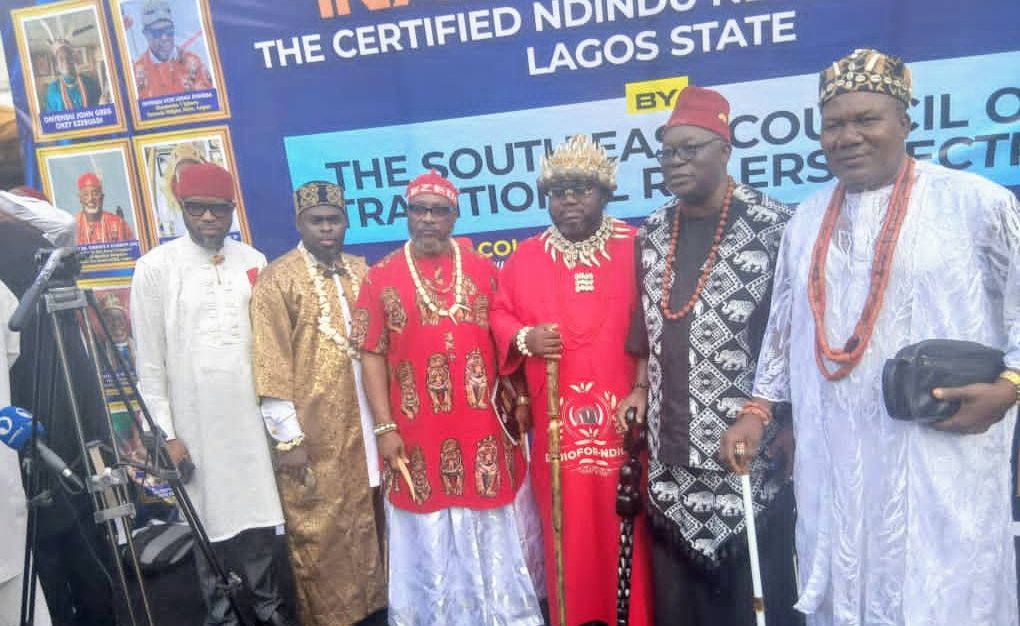
The South-East Council of Traditional Rulers has inaugurated the Ndindu Ndigbo framework in Lagos as part of efforts to regularise the nomenclature and titles of Igbo traditional leaders in the Diaspora.
The event, held at the Colonnades Hotel, Ikoyi, Lagos, brought together prominent traditional rulers, Igbo leaders and stakeholders from different walks of life.
Among those in attendance were the Obi of Onitsha, HRM Nnaemeka Achebe (Agbogidi); HRM Eze Dr E.C. Okeke, Chairman, Ethics, Peace and Conflict Resolution Committee of the South-East Council of Traditional Rulers; HRM Igwe Amb. Lawrence Agubuzor; HRM Igwe Chidubem Iweka, Chairman, Anambra State Traditional Rulers Council; HRM Eze Linus Mbah, Chairman, South-East Council of Traditional Rulers; HRM Eze Charles Mkpuma; and HRM Igwe Samuel Ikechukwu Asadu, among other dignitaries.
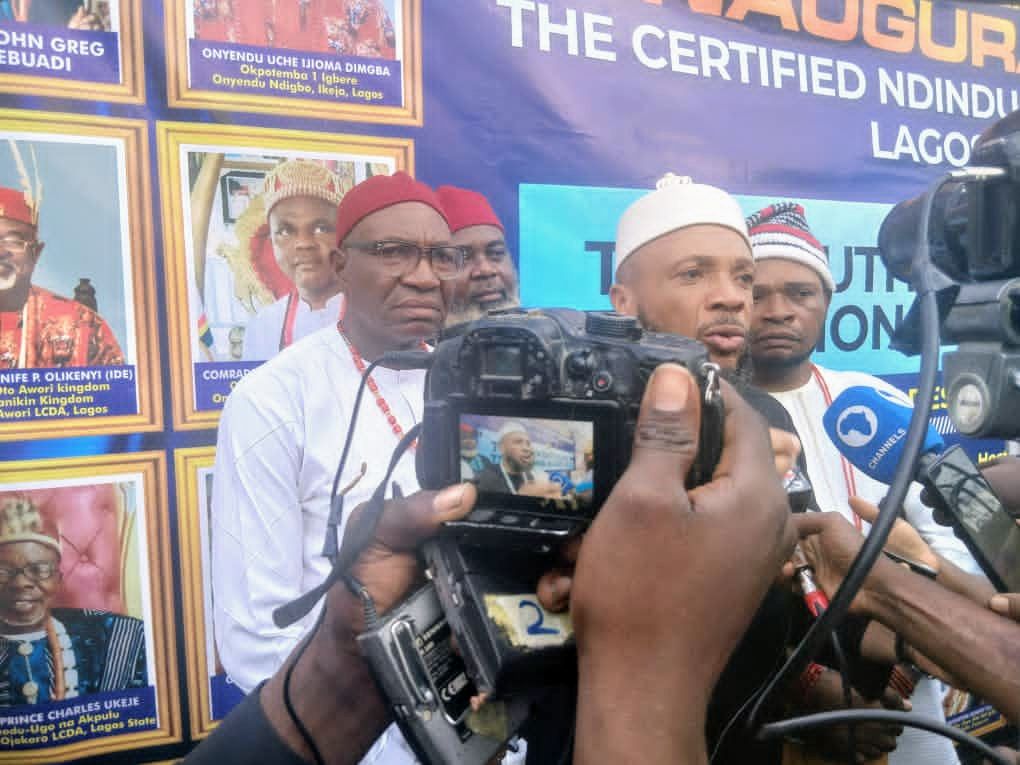
The event was chaired by the Chief Executive Officer of Embassy Pharmaceutical, Sir Nnamdi Obi.
The Ndindu Ndigbo had earlier met with the South-East Traditional Rulers following the screening conducted by the Chief Charles Odunukwe-led Committee on the Regularisation of Igbo Diaspora Traditional Title and Leadership (CRIDTTL), after which certificates of recognition were issued to those approved.
In his address, the Obi of Onitsha, HRM Nnaemeka Achebe, urged the Ndindu to imbibe humility, transparency and honesty in all their endeavours, stressing that such values would promote peace between them and their host communities.
Similarly, HRM Iweka commended Ndigbo for their commitment to peace and unity and urged them to cooperate with their leaders in efforts to promote Igbo cultural values in the Diaspora.
Also speaking, Eze E.C. Okeke explained that the Lagos event was a public presentation of the Igbo leaders, noting that the formal inauguration had earlier taken place in Imo State.
He appealed to the Ndindu to abide by the regulations guiding the new nomenclature in order to promote peace and unity among Ndigbo in the Diaspora.
In his contributions, Chairman Ndindu Lagos State Onyendu John- Greg Ezebuadi (Okporoagha)while thanking the governors of the five South East state for their support, appeal for allocation of funds to Ndindu as a mark of appreciation for their noble efforts at promoting culture and welfare of Ndigbo in the Diaspora.
The Leader of Ndindu Ndigbo in Lagos State, Onyendu Uche Dimgba, who spoke on behalf of his colleagues, thanked the royal fathers from the South-East for their intervention, saying the initiative had ended years of squabbles among Igbo leaders outside Igboland.
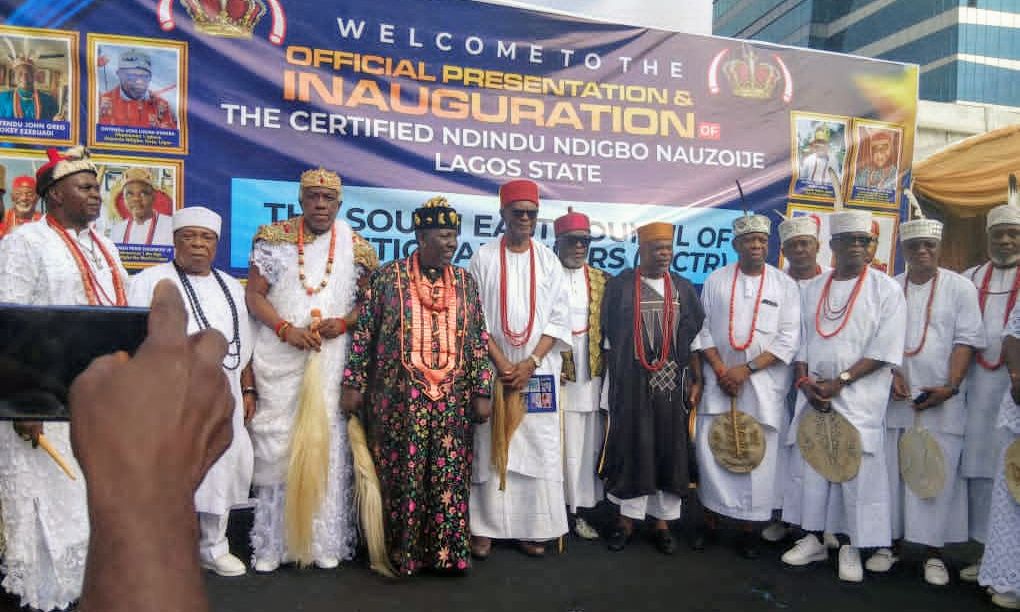
Dimgba assured that the terms and guidelines of the new nomenclature would be adhered to in order to ensure harmony among Ndigbo in Lagos State.
Chairman of CRIDTTL, Chief Charles Odunukwe, thanked the South-East Council of Traditional Rulers for its moral and spiritual support.
He said the new arrangement would pave the way for greater peace and orderliness among Ndigbo in the state.
The Secretary of CRIDTTL, Prince Ubochi Ubochi, said the initiative was necessitated by the different forms of Igbo traditional titles used outside Igboland over the years, including Eze, Eze Igbo, Eze Ndigbo, Igwe and other royal designations.
According to him, the practice had generated questions concerning authority, jurisdiction, recognition and the relationship between Diaspora Igbo leadership and the traditional institutions of host communities.
Ubochi said the new framework was designed to ensure that Igbo leaders in the Diaspora operated within a recognised and responsible structure.
He explained that the South-East Council of Traditional Rulers subsequently implemented the Onyendu Ndigbo framework through the induction of Diaspora leaders.
According to him, reports of the May and July exercises described Onyendu as traditional representatives and custodians of Igbo values rather than territorial monarchs.
CRIDTTL has also provided a website, www.cridttl.com.ng, where the names of accredited Onyendu can be verified.
Ubochi noted that the exercise was not a one-off initiative, saying 33 people were inducted in May, while another 44 were inducted in July, bringing the total from the two exercises to 77.
He added that the process had also included people connected with Igbo communities outside Nigeria.