Imo Charter of Equity: Why Orlu Must Consider Stepping Aside in 2027”- Mazi Ubochi
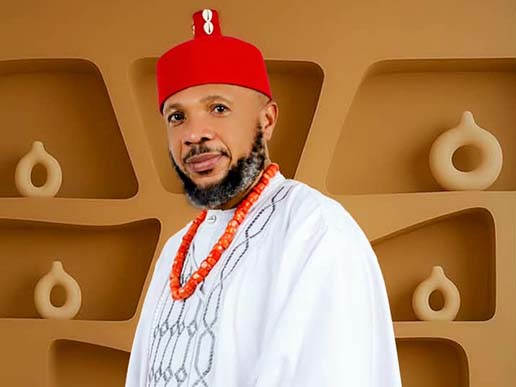
By Brown Chimezie
Mazi Ubochi Ubochi speaks on political equity, the Imo Charter of Equity, the concentration of gubernatorial power, and why the future of Imo State must be bigger than the interests of any one senatorial zone.
As political consultations intensify ahead of the next Imo State governorship election, Mazi Ubochi Ubochi, an indigene of Orlu Zone, argues that the time has come for the state to confront an uncomfortable but necessary question: should a zone that has enjoyed the governorship for the overwhelming majority of the Fourth Republic seek the office again, or demonstrate statesmanship by supporting another zone? In this interview, he explains why he believes political restraint, fairness and inclusion are essential to the future of Imo State.
You are from Orlu Zone. Why are you questioning Orlu’s continued pursuit of the governorship?
That is precisely what makes this conversation important. If I were from another zone, some people might dismiss my position as the grievance of someone who feels excluded from power. But I am from Orlu. I understand our pride, our political influence, our contributions to Imo State and our desire to continue producing leaders.
However, I believe there comes a time when a people must rise above what is politically convenient and ask what is right for the entire state.
My position is simple; my identity as an Orlu man must never prevent me from speaking honestly about what I believe is best for Imo State.
Orlu is part of Imo State, but it is not the whole of Imo State. Okigwe and Owerri are equally important.
Their people have the same dignity, aspirations and right to feel that they belong to a state whose highest political office is not permanently beyond their reach.
I am not asking Orlu to surrender its pride. I am asking Orlu to demonstrate a greater kind of pride: the pride of a people confident enough to make room for others.
What exactly is your argument against Orlu producing another governor in 2027?
The argument begins with history, and history is difficult to dispute.
Since the return to democratic government in 1999, Imo State has been governed by five individuals: Achike Udenwa, Ikedi Ohakim, Rochas Okorocha, Emeka Ihedioha and Hope Uzodimma.
Orlu produced Udenwa, who served for eight years; Okorocha, who served for eight years; and Uzodimma, who assumed office in January 2020 and is expected to complete his second term in January 2028.
Okigwe produced Ohakim, who served for four years, while Owerri produced Ihedioha, whose tenure lasted from May 2019 until January 2020.
By the end of Uzodimma’s tenure, Orlu’s cumulative time in office during the Fourth Republic will amount to approximately 24 years. Okigwe will have had four years, while Owerri’s only governorship in this period lasted about seven and half months.
These figures should make every sincere Imo person pause and reflect.
When three senatorial zones share one state, but one zone accounts for approximately 24 years of governorship while the other two account for only about four years and eight months combined, we must ask whether our politics is delivering a reasonable sense of balance.
This is not an accusation against Orlu people. It is an invitation to confront an imbalance that deserves serious attention.
Some people will argue that democracy is about winning elections, not sharing power among zones. What is your response?
I agree that elections must remain democratic. Every eligible Nigerian has constitutional rights, and no senatorial zone should be declared legally ineligible to contest the governorship merely because it has produced previous governors.
But democracy is more than the mechanical process of casting votes and announcing a winner. It also requires political maturity, inclusion, mutual respect and a willingness to build a state in which different communities believe they have a meaningful stake.
There is a difference between having the legal right to contest and deciding whether contesting again is the wisest choice for the collective good.
A person may have every legal right to pursue an opportunity and still choose to step aside because doing so serves a greater purpose.
That is the distinction I am making.
My argument is not that Orlu must be legally barred from the ballot. My argument is that Orlu should voluntarily choose not to seek the governorship in 2027, in the interest of equity, political stability and a stronger sense of belonging for all Imo people.
Constitutional entitlement should not be confused with an obligation to pursue every available political opportunity.
Are you saying Orlu has benefited unfairly from its political dominance?
I would rather frame the issue in terms of political concentration than accuse an entire zone of wrongdoing.
Orlu has produced governors under different political parties and at different periods. Those administrations should be assessed individually on their records, achievements, failures and consequences for the people of Imo State.
It would be unfair to suggest that every Orlu person has benefited equally from having an Orlu governor. Many ordinary people in Orlu communities continue to face the same challenges confronting people elsewhere in the state.
The problem is therefore not that every Orlu indigene has enjoyed special privileges. The problem is that the highest political office has been concentrated in one zone for a disproportionately long period.
The governorship is not the private property of any zone. It is an office held in trust for the entire state.
When political power is repeatedly concentrated in one area, the other areas may begin to feel that their opportunities are limited, regardless of the personal qualities of individual candidates.
That perception matters. A state cannot build lasting unity by ignoring the concerns of significant sections of its population.
What about the achievements of Orlu governors? Shouldn’t those achievements count?
Of course, they should count. We must acknowledge achievements wherever they occur, regardless of the zone from which a governor comes.
Orlu people have every reason to be proud of their sons who have occupied the office. Their contributions should be documented fairly, just as their shortcomings should be examined honestly.
But achievements do not establish permanent ownership of political office.
If an administration builds roads, improves schools, strengthens healthcare or creates economic opportunities, those benefits should extend beyond the governor’s home zone. That is what state leadership is supposed to accomplish.
A governor’s success should be measured by the welfare of Imo people as a whole, not merely by the political strength of the zone that produced the governor.
Indeed, if Orlu has contributed substantially to Imo’s political leadership, one way to strengthen that legacy would be to demonstrate that the zone can also lead in promoting fairness and national-style political accommodation within our state.
The highest expression of political leadership is not simply the ability to occupy an office. It is the ability to build a system that gives others a fair opportunity to occupy it too.
What is your position on the Imo Charter of Equity?
I believe the Charter of Equity deserves serious attention, particularly because it addresses a question that cannot be resolved by electoral competition alone: how do we ensure that the three senatorial zones feel included in the political future of Imo State?
The Charter was promoted as a framework for rotating the governorship among Orlu, Okigwe and Owerri. Its underlying objective was to encourage political balance and a smoother transfer of leadership among the zones.
However, a charter of equity must be more than a slogan used during political negotiations. It must inspire confidence that fairness applies to everyone.
It should not be interpreted selectively, invoked only when it benefits a particular political interest or discarded when it becomes inconvenient.
At the same time, we must be honest about its legal status. The Charter is a political understanding, not a constitutional provision that automatically disqualifies candidates from a particular zone.
Its strength therefore depends on consultation, public confidence, political commitment and the willingness of leaders to honour the principle of inclusion.
If we believe in the Charter, we must be prepared to practise its principles even when doing so requires sacrifice.
Owerri Zone had Emeka Ihedioha as governor. Why should his short tenure be treated as though Owerri has never governed?
I would not say that Owerri has never governed. That would be historically inaccurate. Emeka Ihedioha became governor on 29 May 2019 and left office on 15 January 2020 following the Supreme Court judgment.
His tenure lasted approximately seven months and 17 days.
The important question is whether that brief period provides a reasonable basis for saying that Owerri has enjoyed a comparable opportunity to Orlu.
I do not believe the figures support that conclusion.
There is a substantial difference between having the office for approximately seven and a half months and having it for multiple eight-year administrations.
Recognising Ihedioha’s tenure is a matter of historical accuracy. Recognising the disproportion in the length of time each zone has governed is a matter of political analysis.
Both facts can be acknowledged simultaneously.
The purpose is not to erase history or diminish anyone’s tenure. It is to have an honest conversation about the distribution of political opportunity over time.
If Orlu steps aside, which zone should produce the next governor: Okigwe or Owerri?
Owerri Zone has the strongest moral and historical claim to produce Imo State’s next governor in 2027. Since 1999, Orlu will have held power for about 24 years, Okigwe for four years, while Owerri’s only governor, Emeka Ihedioha, served for just over seven months.
This significant imbalance means Owerri and Okigwe cannot be considered to have had equal opportunities to govern. In keeping with the Imo Charter of Equity, fairness and rotation, Owerri deserves priority in 2027.
This is not a rejection of Okigwe’s aspirations or an automatic endorsement of any candidate. All aspirants must demonstrate competence, integrity and capacity. However, equity requires us to acknowledge the unequal history of access to the governorship.
As an indigene of Orlu, I believe our zone should voluntarily step aside and support Owerri. This would be an act of statesmanship and a meaningful step towards building a more inclusive and united Imo State.
What do you say to Orlu politicians who believe that stepping aside would weaken the zone politically?
I would ask them to distinguish political strength from continuous occupation of the governorship.
A zone does not lose its political relevance merely because it supports another zone’s candidate. It can remain influential through representation in the legislature, federal appointments, state appointments, party leadership, local government administration, economic development and participation in government.
Political maturity involves understanding that leadership is not a zero-sum game in which one community must lose everything for another to gain an opportunity.
Orlu can remain politically active, negotiate firmly for fair representation and demand effective governance while supporting a governor from another zone.
In fact, choosing to support a fair transition could strengthen Orlu’s reputation as a zone capable of thinking beyond immediate political advantage.
There is no shame in stepping aside voluntarily. There is considerable dignity in recognising that the collective interest sometimes demands restraint.
Orlu does not have to occupy the governorship at every opportunity to remain relevant to the future of Imo State.
Are you worried that your position could make you unpopular among your own people?
Any serious position on a sensitive political question may attract disagreement. I understand that some people may interpret my argument as disloyalty to Orlu or as an attempt to weaken the zone.
But I believe genuine loyalty must permit honest reflection.
If I see a question that deserves public discussion and remain silent simply because speaking might be unpopular, then I would be placing personal comfort above the interests of the state.
I am not asking anyone to abandon Orlu’s legitimate interests. I am asking us to consider those interests alongside the equally legitimate interests of Okigwe and Owerri.
Our communities are connected by family relationships, commerce, friendships, cultural traditions and a shared future. The political divisions we create today can have consequences for the relationships our children inherit tomorrow.
We should therefore approach this debate without insults, hostility or accusations against ordinary people from any zone.
I can disagree with a political strategy without disrespecting the people who support it.
And I can advocate for another zone to have an opportunity without ceasing to be an Orlu indigene.
Some may say that zoning places geography above competence. Shouldn’t the best candidate win, regardless of zone?
Competence is indispensable. No zone should be entitled to produce a governor simply because it is its turn. Every candidate must demonstrate integrity, administrative capacity, sound judgment, respect for the law and a credible plan for developing the state.
But the argument that competence and equity are incompatible presents a false choice.
We have qualified people across Orlu, Okigwe and Owerri. There is no reason to assume that the search for competence must begin and end in one zone.
The appropriate approach is to insist on both principles; equitable access to the opportunity to lead and rigorous scrutiny of the individuals seeking that responsibility.
A candidate from Okigwe or Owerri should not be supported merely because of the candidate’s zone. Equally, a candidate from Orlu should not be entitled to another turn merely because Orlu has the political organisation or resources to compete effectively.
The question should be: who is qualified, who has a credible vision, who can unite the state, and how do we ensure that the opportunity to answer those questions is not persistently concentrated in one part of Imo?
Equity should broaden the field of opportunity, while competence should determine the quality of leadership.
What specific message would you give Governor Hope Uzodimma and other Orlu political leaders?
I would ask them to consider the legacy they want to leave behind.
Political legacies are not measured solely by the number of years a zone produces governors. They are also measured by the institutions strengthened, the people united, the opportunities created and the fairness demonstrated to other communities.
As the state approaches the next governorship transition, Orlu’s political leaders have an opportunity to contribute to a broader conversation about the future of Imo State.
They can help create an atmosphere in which the three zones negotiate in good faith, qualified candidates emerge through legitimate political processes, and the eventual transition strengthens rather than weakens public confidence.
This is not a demand for Governor Uzodimma or any individual politician to violate the Constitution or surrender anyone’s legal rights. It is an appeal for political leadership to recognise that voluntary accommodation can sometimes achieve what legal rules alone cannot: a deeper sense of belonging among the people.
I would like Orlu leaders to be remembered not only for the administrations they produced, but also for the wisdom they demonstrated when the question of fairness arose.
What is your message to the people of Owerri?
My message is that your aspirations deserve to be heard and treated with respect.
No zone should have to plead indefinitely for recognition in a state it helped to build. Every community should be able to participate in the political process with the reasonable expectation that its interests will be considered.
However, I would also urge leaders and citizens in Okigwe and Owerri to approach the issue constructively. The objective should not be to humiliate Orlu, deny its contributions or create a permanent grievance against its people.
The objective should be to build a political understanding that allows all three zones to participate in leadership without fear that one will continually dominate the others.
Orlu, Okigwe and Owerri are not enemies. They are constituent parts of the same state.
If we approach this question with maturity, it can become an opportunity to strengthen solidarity rather than deepen division.
What would you say to those who insist that Orlu should contest again because there is no law preventing it?
They are correct about the constitutional principle; there is no automatic legal prohibition preventing an eligible Orlu indigene from contesting simply because the zone has produced previous governors.
But the absence of a legal prohibition does not end the moral and political conversation.
Our society depends on many forms of responsibility that go beyond the minimum requirements of the law. We value fairness, compromise, respect for agreements and the willingness to consider how our decisions affect others.
The fact that someone can pursue an opportunity does not mean that pursuing it is always the best decision for the wider community.
My appeal is therefore directed at political conscience, not legal coercion.
I am asking Orlu politicians, party leaders, community leaders and ordinary citizens to consider whether another immediate bid for the governorship would serve the long-term unity of Imo State better than supporting an equitable transition.
This is a question that deserves serious consideration, not dismissal.
Finally, what is the future you want for Imo State?
I want an Imo State in which no child grows up believing that their geographical origin limits their opportunities.
I want a state where a young person from Orlu can aspire to become governor, a young person from Okigwe can aspire to become governor, and a young person from Owerri can pursue the same ambition with confidence that their background will not become a permanent political disadvantage.
I want political parties to identify capable people across the state, institutions to function fairly, public resources to benefit all communities, and political competition to produce better governance rather than deeper divisions.
Most importantly, I want us to stop treating the governorship as a prize that must be held by one zone for as long as it can retain it.
The office belongs to the state. Its purpose is to serve the people.
If Orlu has enjoyed approximately 24 years of governorship by the end of the current administration, then supporting another zone’s opportunity in 2027 would be a meaningful demonstration that we recognise the importance of balance.
That choice would not diminish Orlu. It could elevate our contribution to the political development of Imo State.
History will remember not only who held power, but also who helped make our political system more inclusive.
Let me conclude by saying this clearly: I am proud to be from Orlu Zone. I will not apologise for my origin, and I do not believe Orlu people should ever be made to feel inferior to anyone.
But my pride in Orlu does not require me to disregard the aspirations of Okigwe and Owerri.
I believe the time has come for us to examine our political history honestly, recognise the disproportion in the length of time our zones have held the governorship, and consider a voluntary transition that gives another zone a fair opportunity.
This is not about punishing Orlu. It is about strengthening Imo State.
It is not about declaring Orlu unqualified. It is about recognising that political opportunity should not remain concentrated in one zone indefinitely.
It is not about imposing a candidate on the electorate. It is about encouraging our political leaders to embrace fairness while respecting the Constitution and the democratic rights of every eligible citizen.
My message to Orlu is simple; we have had our opportunity to lead. Let us now demonstrate the wisdom to help others have theirs.
My message to Okigwe and Owerri is equally clear: your aspirations matter, and your place in the future of Imo State deserves serious consideration.
And my message to every citizen of Imo State is this: let us build a state where our common identity is stronger than our zonal divisions.
Because, ultimately, the question is not whether Orlu can produce another governor.
The question is whether, after all these years, we are ready to choose a path that strengthens fairness, inclusion, mutual trust and the unity of our state.
For me, the answer must begin with a willingness to put Imo State first.