Ubochi takes long sabbatical from Ohanaeze Ndigbo Lagos State
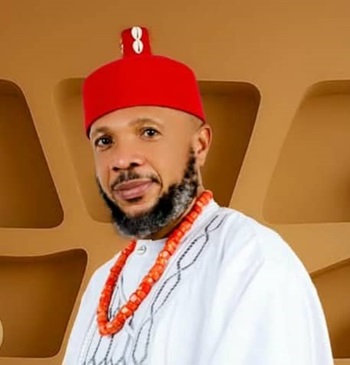
Prince Ubochi Ubochi JP, a leading stakeholder of Ohanaeze Ndigbo Lagos State and Traditional Prime Minister of Amaifeke, has announced his intention to take what he described as a “very long sabbatical” from the affairs of the Lagos State chapter, expressing deep frustration over what he considers the persistent mischaracterisation and labelling of well-meaning stakeholders who have sacrificed their resources and personal comfort in the struggle to reposition the Igbo apex socio-cultural organisation.
Ubochi made this declaration on Friday 13th November while presenting his observations, submissions and recommendations before the Fact-Finding Committee constituted by Ohanaeze Ndigbo Worldwide to investigate the protracted leadership crisis in Lagos State. He appeared alongside Chief Itodo David Okechukwu; Assistant Chief Protocol Officer Ohanaeze Ndigbo Lagos State and Chief Austine Onyeagwara; Ohanaeze Executive Ibeju-Lekki.
The committee was led by the Deputy President-General, Chief Okey Nwadinobi, and included the Secretary-General, Engr. Emeka Sibeudu; Assistant Publicity Secretary, Bismarck Orji; Chief Charles Nkata, Esq., Secretary of the Fact-Finding Committee; A Royal Father HRH Eze Nwankwo Nnadede; His Lordship Justice Alpha Ikpeama; and Mazi Okechukwu Unegbu, President of Otu Oka-Iwu Association, Lagos, who led a team of lawyers.
In a presentation that combined personal reflections, historical perspectives, sharp criticisms and far-reaching recommendations, Ubochi insisted that the Lagos crisis should not be approached merely as a contest over who occupies the presidency. Rather, he argued, it should be treated as an institutional problem requiring reconciliation, stability, fairness and a carefully managed transition.
One of the most striking moments of his presentation was his declaration that he might be withdrawing from active involvement in the affairs of Ohanaeze Ndigbo Lagos State.
According to him, he had invested more than ₦5 million since March 2025, when he played a leading role in bringing together Chief Sunday Ossai and Chief Robert Obasi, who had previously been on opposing sides, to revive the Lagos chapter.
He said his motivation for serving Ndigbo was deeply rooted in encounters with two respected Igbo leaders who challenged him as a young man to reflect on what he had personally sacrificed for his people.
He recalled the late Igbo leader, Dim Chukwuemeka Odumegwu Ojukwu, and Senator High Chief Ben Obi (Ojeluigbo), whom he said visited Ireland around 2007 during the first Iriji Festival he organised.
“Both men, at different occasions, asked me what I had sacrificed for Ndigbo. I was much younger then and perhaps too clever by half, because I responded by asking them some difficult questions. But those encounters changed my worldview. They made me understand that loving one’s people must go beyond words; it must be demonstrated through sacrifice.”
Ubochi lamented that despite the resources, time and personal commitment he had invested, he had increasingly become the subject of attacks, suspicion and accusations from different quarters.
“I am heavily pained that people who should understand the sacrifices made by those trying to rescue our organisation are sometimes the same people who describe them as troublemakers. My presentation today may be the last assistance I will offer Ohanaeze Ndigbo Lagos State for a long time. I am poised for a very long sabbatical. A very long one.”
He, however, stressed that his decision was not an abandonment of the Igbo nation but a withdrawal from what he described as the exhausting and often misunderstood politics of the Lagos chapter.
Ubochi identified the apparent indifference of wealthy, educated and influential Igbo residents in Lagos as one of the greatest problems confronting the organisation.
He argued that the absence of sustained involvement by respected Igbo professionals, business leaders and other influential stakeholders had created room for individuals with questionable motives to dominate the affairs of the chapter.
He alleged that some past officeholders and influential actors had turned leadership contests, appointments, titles and internal disputes into opportunities for personal financial benefit.
He specifically raised concerns about alleged inducements surrounding elections, post-dated cheques, financial arrangements with contestants, impeachment controversies and the use of litigation as a weapon in internal political disagreements.
According to him, these practices, where established, undermine the credibility of the organisation and discourage people who genuinely wish to serve.
He further argued that individuals who challenge such practices often become targets of propaganda and personal attacks, while those who should ordinarily provide principled leadership sometimes distance themselves from the controversy.
Ubochi disclosed that his earlier recommendation to the late Chief Engr. Dr. Emmanuel Chukwuemeka Iwuanyanwu CFR, Ahaejiagamba Ndigbo, for the establishment of separate Mainland and Island chapters of Ohanaeze Ndigbo Lagos State was partly motivated by the need to attract greater participation from the influential Igbo population residing in Lagos.
He said the proposed Island Chapter would have provided a more deliberate platform for the participation of the business and professional elite, adding that the idea deserved further consideration.
Recounting his experience, Ubochi alleged that his involvement in the reconciliation efforts that revived the Lagos chapter brought him into conflict with Chief Solomon Ogbonna.
He claimed that after Solomon realised the extent of his involvement in the resuscitation process, he became a particular target of personal attacks, allegations and negative broadcasts.
Ubochi said he repeatedly volunteered to represent Ohanaeze stakeholders at police stations as disputes escalated, sometimes undertaking the responsibility alone.
He explained that when efforts to resolve the disagreements failed, members of the Justice Forum agreed to pursue legal action, with a Senior Advocate of Nigeria, whom he described as a close friend, engaged to handle the matter.
He also referred to subsequent litigation involving Chief Leo Okafor, explaining that the legal actions were informed by concerns about the circumstances surrounding the disputed leadership arrangements.
His position was that the legal battles had become part of a wider institutional crisis that could no longer be resolved through informal assurances or political convenience.
Responding to suggestions that the visit of the President-General of Ohanaeze Ndigbo Worldwide, Distinguished Senator John Azuta-Mbata, to Lagos on August 28, 2025, should have resolved the crisis, Ubochi strongly disagreed.
He argued that the circumstances at the time made a lasting settlement unlikely without clear and enforceable commitments from the parties.
According to him, subsequent voice notes released by Chief Emmanuel Ubah, popularly known as Otunba Ojoto, reinforced his concerns about the intentions and preparations of some actors before the meeting.
Ubochi also questioned why Chief Solomon Ogbonna had the privilege of an advance engagement with the visiting delegation when other stakeholders did not enjoy the same opportunity. He questioned the reluctance of the Global body to make a bold statement earlier about the chapter when the architect of the crisis was well-known.
He wondered how parties who had allegedly been involved in taking their opponents through police complaints and court proceedings could suddenly “on the spot” be expected to embrace reconciliation without a clearly negotiated agreement.
He particularly questioned the absence of any firm commitment to withdraw outstanding court cases against opposing stakeholders.
“It would have been suicidal to hand over Ohanaeze to somebody who had extended his leadership beyond his tenure and reportedly boasted that he would remain in office like Putin of Russia. Reconciliation cannot be built on sentiments, personal assurances or selective engagements. There must be clear terms, mutual commitments and guarantees.”
He maintained that the Global leadership should have insisted on a comprehensive agreement addressing the pending litigation and the fundamental disagreements between the parties before expecting a sustainable resolution.
Ubochi also questioned the apparent failure of successive Ohanaeze administrations to respect and implement decisions reached by their predecessors. He specifically recalled that Chief Sunday Ossai had been recognised, while Chief Solomon Ogbonna’s position had been rejected by the past Ohanaeze Ndigbo Worldwide leadership. He added that the next Ohanaeze Ndigbo Worldwide leadership may wipe out all the legacies of this current leadership going by their example.
Asked why Ossai should not be allowed back, he argued that Ossai had become ineffective, lacking the energy and administrative competence required to satisfactorily discharge the responsibilities of the presidency.
He also suggested that Ossai appeared relieved to have stepped away from the difficult and turbulent politics of Ohanaeze Ndigbo Lagos State.
Ubochi stressed that his position was not necessarily shared by all his former allies but insisted that the overriding consideration should be the emergence of a workable and unifying arrangement.
The centrepiece of Ubochi’s presentation was his proposal for the establishment of a Reconciliation and Transition Committee (RTC) as a temporary, all-inclusive transitional administration for Ohanaeze Ndigbo Lagos State.
Under his proposal, all 57 Local Government Area and Local Council Development Area chairmen, together with their respective executives elected in 2022/2023, should be returned to participate in the transitional arrangement.
He also proposed that the existing state executives be retained with Chief Leo Okafor as President of the arrangement.
He explained that the proposal was deliberately designed to avoid the mistakes of another divisive election conducted while distrust, factional disagreements and multiple court cases remain unresolved.
His argument was that the existing elected structures at the state, LGAs and LCDAs should not be discarded when they could provide an immediate institutional framework for reconciliation and continuity.
“The devil we know is better than the angel we don’t know. My question is simple: what is the alternative, and how do we ensure that we do not replace one problem with another?”
Ubochi acknowledged that Chief Leo Okafor was not his preferred candidate for the presidency and said Okafor might be surprised to learn of his recommendation.
Nevertheless, he argued that Okafor’s involvement with both sides of the crisis made him a possible compromise candidate capable of holding the arrangement together.
“Leo Okafor is not my ideal candidate. But I want a workable solution. He has been on both sides of this crisis, and that makes him a possible bridge. We must be prepared to make difficult compromises if we genuinely desire peace.”
He recalled that efforts by Onyendu John Greg Ezebuadi and Onyendu Gabby Emeka Dimude to bring opposing stakeholders together around March had nearly produced a breakthrough, arguing that the development demonstrated that reconciliation was possible if approached sincerely.
Ubochi proposed that the RTC should have a clearly defined and time-bound mandate, subject to the approval and guidelines of the Global Executive Council.
Its responsibilities would include:
Restore peace and unity reconcile aggrieved stakeholders where authorised, review and harmonise the Lagos State chapter’s by-laws to establish an acceptable and workable governance framework. facilitate the termination or appropriate resolution of pending court cases as part of a comprehensive settlement, organise and conduct free, fair, transparent and credible elections under guidelines approved by the Global Executive Council, ensure a peaceful transition. hand over to duly elected officers after the electoral process and immediately dissolve the transitional body following a successful handover.
Ubochi recommended November 2028 as the deadline for the RTC to complete its assignment and hand over to an elected administration. He explained that this would be approximately two months before the expected conclusion of Senator John Azuta-Mbata’s leadership of the Global Executive Council.
He argued that a properly managed transitional arrangement would allow the Global leadership to supervise the restoration of institutional stability in Lagos without leaving behind another unresolved leadership crisis.
On the question of conducting fresh elections immediately, Ubochi insisted that an election held while multiple court cases remain active could deepen rather than resolve the crisis.
He argued that the cases initiated through the Justice Forum could be addressed, but other outstanding proceedings by others would also have to be considered.
He therefore called for a comprehensive settlement that would bring all parties to the table, establish mutually acceptable terms and provide a clear pathway for the resolution or withdrawal of pending litigation, subject to the applicable legal processes and the decisions of the courts.
According to him, the proposed RTC would provide the political and institutional framework necessary to achieve that objective.
Ubochi also addressed concerns reportedly expressed by some stakeholders about the sincerity of the Fact-Finding Committee.
He said some individuals might decline invitations because of previous experiences in which persons allegedly influenced decisions and administrative arrangements at the Global Secretariat.
He, however, expressed confidence in the present leadership of Ohanaeze Ndigbo Worldwide and urged the committee to protect its assignment from opportunistic interference.
He recommended that invitations should remain open to all interested stakeholders, including those unwilling to appear physically, who should be permitted to submit written representations and supporting documents within a clearly specified deadline.
He said this would give every party a fair opportunity to be heard and strengthen the credibility of the committee’s eventual recommendations.
Another significant issue raised by Ubochi was the question of zoning and the historical place of Imo State in the leadership of Ohanaeze Ndigbo Lagos State.
He argued that if zoning was to be applied in accordance with the Ohanaeze Ndigbo Worldwide Revised Constitution, the historical circumstances surrounding the emergence of Chief John Uche as president in 1999 must be carefully examined.
According to him, Uche contested an open election against Chief John Nwatu of Enugu State and won at a time when the organisation had no constitution, defined structure or established tenure arrangement.
He maintained that the organisation did not have a constitution until 2003 and that it would therefore be historically questionable to automatically treat Uche’s 1999 emergence and brief stay as a constitutional allocation of the presidency to Imo State.
He warned that any zoning arrangement that excluded Imo State without a careful examination of the historical facts could generate another serious controversy.
Ubochi further claimed that Imo State currently accounts for approximately 47 per cent of active members of Ohanaeze Ndigbo Lagos State.
He therefore urged the Fact-Finding Committee to advise the Global Executive Council to establish clear and equitable guidelines for zoning, taking into account history, constitutional provisions, representation and the actual composition of the Lagos membership.
He was emphatic that his argument was not driven by personal ambition.
“I want to state categorically that I am not interested in any position in Ohanaeze Ndigbo Lagos State. I have zero per cent interest in any office. What I want is fairness and equity for my state. We cannot build lasting peace on arrangements that make a significant part of our membership feel excluded.”
When asked to comment on the election reportedly conducted on 6 April 2026, Ubochi dismissed it as an exercise held in the face of an existing and valid court order. He argued that an election conducted in such circumstances cannot be regarded as a legitimate basis for determining the chapter’s leadership, maintaining that its validity is fundamentally compromised by the subsisting judicial order.
In concluding his presentation, Ubochi returned to what he described as the most important question facing the Igbo community in Lagos.
He asked how the organisation could be rebuilt into a credible, united and influential body capable of defending the interests of ordinary Igbo residents, regardless of their social status, political connections or financial strength.
He maintained that the crisis should be viewed as an opportunity for institutional reform rather than merely another contest between individuals.
“Chinese wisdom teaches that crisis can create opportunities for progress. I am not discouraged by everything that has happened because I strongly believe that, if properly handled, we can emerge stronger than ever before.”
He urged the Fact-Finding Committee to recommend a solution that would not simply settle the immediate leadership dispute but address the underlying weaknesses that have repeatedly produced divisions in the Lagos chapter.
He thanked the committee members for granting him the opportunity to present his views and commended their sacrifices in the service of the Igbo nation.
Ubochi’s announcement of a long sabbatical may well become one of the most talked-about aspects of his appearance before the committee.
For a man who says he has committed substantial personal resources, time and energy to the revival of Ohanaeze Ndigbo Lagos State, the declaration represents a strong expression of disappointment.
Yet, his presentation also reveals that he has not abandoned his desire to see the organisation restored.
His proposed Reconciliation and Transition Committee, with all 57 LGA and LCDA chairmen and their executives brought into a single transitional structure with the state exco, is an ambitious attempt to move the organisation away from factional rivalry and towards institutional stability.
Whether the Global Executive Council accepts the proposal, modifies it or adopts another pathway remains to be seen.
What is clear, however, is that Ubochi has placed a significant proposal before the Fact-Finding Committee; bring everyone to the table, restore institutional stability, resolve the disputes, conduct credible elections and hand over to a duly elected leadership.
And, having made his recommendations, he says he is going for a long sabbatical until the crisis is resolved.
His message is unmistakable; Ohanaeze Ndigbo Lagos State must survive beyond the ambitions, disagreements and personal interests of any individual.