Aderibigbe Calls for Urgent Safety Reforms Amid Lagos, Port Harcourt Building Collapses
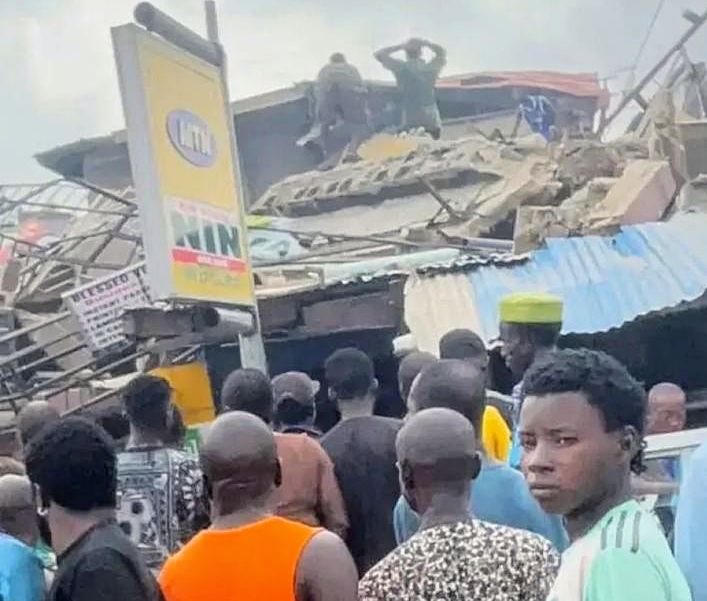
The collapse of a three-storey shopping complex at Alakija, Lagos, which has claimed at least one life while several others remain trapped beneath the rubble, has renewed calls for stronger reforms to Nigeria’s construction governance and building safety framework.
Reacting to the incident, construction and infrastructure expert, Abiola Aderibigbe, described the tragedy as “another painful reminder that preventable failures continue to cost innocent Nigerians their lives.”
According to emergency responders, the building, located along Old Ojo Road near Alakija Bus Stop, collased on Thursday morning, prompting a multi-agency rescue operation involving the Lagos State Emergency Management Agency (LASEMA), the Lagos State Building Control Agency (LASBCA), security agencies and other responders.
The Alakija tragedy came less than 48 hours after another fatal building collapse at a construction site along Odili Road in Port Harcourt, Rivers State, where one person was confirmed dead and several others were rescued following the collapse of a three-storey building under construction.
Expressing condolences to the families of those affected in both incidents, Aderibigbe praised the courage of responders who continue to work under dangerous conditions to rescue victims trapped beneath collapsed structures.
“This is first and foremost a human tragedy. My thoughts are with the families who have lost loved ones, those still anxiously waiting for news, and responders working tirelessly under extremely difficult conditions to save lives.”
While cautioning against speculating on the precise cause of the Alakija collapse before the completion of a formal investigation, Aderibigbe said every structural failure should trigger a wider national conversation about building safety, regulatory oversight and professional accountability.
“We must allow investigators to establish the technical cause of this collapse. Whether it involves structural failure, material defects, unauthorised alterations, poor workmanship, foundation problems or regulatory failures should be determined by evidence.
“However, regardless of the specific cause, every building collapse reminds us that Nigeria must continually strengthen the systems designed to prevent these tragedies from occurring in the first place.”
He said the close succession of the Lagos and Port Harcourt collapses demonstrates that building safety is not merely a local issue but a national challenge requiring sustained attention.
“When fatal collapses occur within days of each other in different parts of the country, we must recognise that this is no longer a series of isolated incidents. It demonstrates the urgent need to strengthen construction governance, regulatory oversight and industry-wide compliance across Nigeria.”
Aderibigbe, who has consistently advocated for a Nigerian Construction Act, commended the Lagos State Government for supporting stronger building control and enforcement measures through the Lagos State Building Control Agency (LASBCA).
He noted that Lagos, through LASBCA, has continued to intensify inspections, identify distressed buildings, enforce compliance with approved building plans and take regulatory action against developments that fail to comply with applicable building control requirements, demonstrating a sustained commitment to protecting lives and improving public safety.
“The Lagos State Government deserves recognition for continuing to strengthen building control enforcement through LASBCA. Increased inspections, proactive enforcement actions and regulatory oversight demonstrate the importance of effective governance in protecting lives and property.
“These efforts should be commended. They show what can be achieved through political will, competent institutions and consistent enforcement.”
He, however, maintained that while Lagos continues to demonstrate leadership in strengthening building control, no individual state can by itself resolve the wider governance challenges affecting Nigeria’s construction industry.
“The challenge extends beyond any one state. Lagos is demonstrating what proactive regulation looks like, but every Nigerian, irrespective of where they live, deserves the same minimum standard of construction governance and building safety.
“That is why I continue to advocate for a Nigerian Construction Act, not to replace the important work already being undertaken by states, but to provide a comprehensive national legislative framework that promotes consistency, strengthens coordination, enhances professional accountability and embeds building safety throughout the entire lifecycle of every construction project.”
The dual-qualified solicitor observed that although Nigeria already possesses important laws, regulations and professional institutions governing aspects of construction, the country would benefit from a comprehensive legislative framework that clearly allocates responsibilities across project conception, procurement, design, construction, occupation, maintenance and enforcement.
“Our challenge is not simply whether rules exist. It is ensuring that responsibilities are clearly defined, consistently enforced and supported by competent professionals, effective inspections and meaningful accountability.”
He further urged the Federal Government, state governments, professional regulatory bodies, developers, contractors and other industry stakeholders to work collaboratively to strengthen compliance, improve construction standards and restore public confidence in Nigeria’s built environment.
“Every collapse should leave us asking not only what failed, but what reforms will prevent the next one. The true measure of our response will not be how many investigations we conduct after buildings collapse, but how many collapses we prevent before they happen.”
Aderibigbe reiterated that protecting lives in Nigeria’s built environment requires a shift from reactive responses after disasters to a culture of prevention, accountability and continuous regulatory improvement, adding that every tragedy should strengthen the country’s resolve to ensure such incidents become increasingly rare.